
keyword: Process


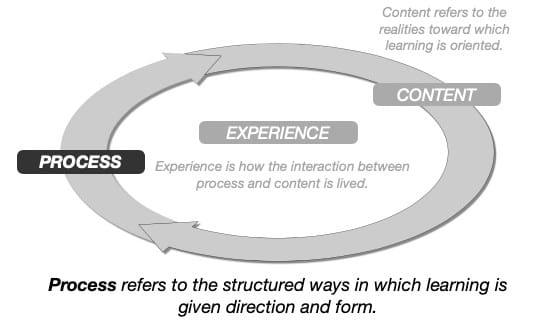
From the Latin procedere - pro (forward) and cedere (to go) - process names movement in a direction.
In education, content answers the question what. Process answers the question how engagement with what is taught is structured.
In educational design, process describes how engagement is organized over time. It includes sequencing, pacing, forms of interaction, feedback, evaluation, and expectations. It shapes how attention is directed, how responses are formed, and how continuity is maintained within a learning environment.
Content refers to the realities toward which learning is oriented: facts, information, skills, ideas, practices, histories and problems.
Asking the questions of what and how is useful, but in reality content and process are inseparable.
The ways in which content is selected, sequenced, framed, and assessed is in itself an embodiment of processes.
In the same way, processes always carry implicit content. A system may aim, for example, to cultivate confidence, yet structure engagement in ways that generate stress or anxiety. Thinking in terms of process in relation to content makes such tensions visible.
Experience is where the interaction between content and process is lived. The quality of experience is shaped by how content and process work together.
Over time, the effects of these interactions settle into patterns. What eventually come to be identified as products or outcomes are the enduring consequences of how content and process have been woven together.